
Samer Hassan
The collapse of the Soviet Union in the early 90s left the United States as the undisputed global hegemon, positioned to shape the world on its terms. With the “evil empire” gone, as Ronald Reagan labeled it, the US now needed a new justification for maintaining a vast military presence.
To justify ongoing imperialist pursuits, the US needed a credible threat. By promoting a new “menace,” it compelled uneasy allies to align with its agenda. While state actors avoided direct confrontation, non-state actors gave the US cover to pursue global interventions.
September 11th, 2001, gave the American empire the opportunity to launch a global campaign of destruction, calling on all of its allies to rally behind it – “Either you are with us, or you are with the terrorists,” was the ultimatum given to the world by George Bush. The US and its proxies began marketing the Global War on Terror (GWOT) as the next struggle of good versus evil, and while the number of American bases began to decrease after the Cold War, the number of countries hosting them increased – a rearrangement for a new strategy of control. The American empire’s presence widened around the world, and its military presence expanded significantly in West Asia, using its petrodollar and defense contracts to lay the groundwork for an onslaught.
Like many countries in the Global South, the Gulf Monarchies were sold the idea that peace and security in their region would be guaranteed if they hosted American military bases. Thousands of American soldiers were deployed to 19 bases all over West Asia. The security agreement was straightforward: host US soldiers, and the countries and their resources will be safeguarded by the United States. But the reality proved much different.
One of the stipulations of maintaining their ties to the US was the petrodollar system, by pricing oil in US dollars, countries around the world entrenched the US dollar as the world’s reserve currency, tying their fates with that of the US. Of course, the petrodollar’s rise occurred during the 70’s oil crisis, which stemmed from Israeli terror in the surrounding regions. The US, aiming to stabilize the flow of oil, while maintaining a “strategic partner” in the Israeli occupation, birthed the petrodollar – an insurance for Arab countries that the US will protect them from Israeli aggression while strategically strengthening itself for years to come.
The tying of the dollar to oil, the US’s relationship with the Israeli entity, and the non-stop conquest for new lands to conquer and exploit ensured that when push came to shove against US-Israel in the region, the chips would come down hard and fast. The United States has become a liability rather than a stable presence, and countries around the world are beginning to learn the lesson.
In December of 2023, as Israel had already slaughtered tens of thousands of Palestinians in Gaza, Yemen’s Ansarallah movement was blockading arms shipments destined for the port of Eilat in Occupied Palestine, shipments meant to continue the genocide. Instead of following its own Leahy Law, which outlaws transporting weapons to countries guilty of war crimes, the US declared the beginning of Operation Prosperity Guardian, which intended to break Yemen’s just blockade by forming a multi-state alliance. US bases in the Gulf countries were used as launch pads to conduct attacks on Ansarallah positions, killing a number of civilians. The US military presence was there to safeguard its empire, international law be damned.
For the Gulf states, the cracks became clear in 2025 when Israel bombed a negotiation delegation in Qatar, which the US had designated as a facilitator between Hamas and Israel. Beyond the usual strongly worded letter, Qatar did not retaliate. What was the point of having a US base on its land if it didn’t act like a deterrent? Six months later, Israel conducted another illegal attack, this time in tandem with the US, against Iran. Using its regional bases, the US launched attacks against Iran, putting Qatari and other nations’ citizens in danger when Iran inevitably responded. What’s striking is that American soldiers were told to evacuate many of these bases and seek shelter in residential neighborhoods, expanding the conflict into civilian areas. Ironically, the very agreement Qatar, the Gulf, and the United States signed ended up being the reason they were attacked by Iran. America promised stability and security; it delivered neither.
America taught the Gulf monarchies that their gamble – or “investment” – didn’t pay off, that an American military base on one’s land ends up being a liability to the host country. The US’s unconditional support for the Israeli occupation left no room for flexibility in its policy towards other regional states– Israel was priority number one, as it always had been since the 70’s crisis, and it would move its Gulf assets to benefit Israel, and if that came at the cost of all other states in the region, so be it.
In early March, Saudi political analyst Suleiman Al-Aqili, in an interview on Al Jazeera, said, “America has abandoned us, and focused its defense systems on protecting Israel, leaving the Gulf states that host its military bases at the mercy of Iranian missiles and drones.”
It is increasingly evident that bowing to American foreign policy is no longer a viable option, but Iran has given countries a way out of America’s clutches and into a more multipolar world, one in which China begins to sap away American hegemony.
As Iran has closed the Strait of Hormuz, CNN reports that a senior Iranian official announced access through the strait can be granted if ships agree to conduct their trade in Chinese yuan rather than American dollars. So far, India and Pakistan have passed through with Iran’s blessings. Moreover, according to Chosun Daily, eight countries are currently in negotiations with Iran to conduct passage. A direct challenge to American dominance of global financial institutions and a sign of things to come. Those who allied with the American and Israeli regimes are being left out to dry.
Not only are US bases within the Gulf monarchies facing the brunt of Iran’s retaliatory attacks, but they are also allegedly being extorted by the American government. Omani journalist Salem al-Juhouri, in an interview on BBC Arabic, stated that “The American president is demanding that the GCC states pay approximately $5 trillion if they want this war to continue, and if they want it to stop, they must pay $2.5 trillion to the United States for what has been accomplished over the past period.” Cracks in American hegemony are becoming more visible as its allies grow more vocal in their opposition to the war.
Furthermore, while Iran maintains control of the Strait, Trump’s call for a coalition to break the closure has met with lukewarm reactions from NATO and other allies, leading to the US President going on a rant on Truth Social:
“I am not surprised by their action, however, because I always considered NATO, where we spend Hundreds of Billions of Dollars per year protecting these same Countries, to be a one way street — We will protect them, but they will do nothing for us, in particular, in a time of need…Because of the fact that we have had such Military Success, we no longer “need,” or desire, the NATO Countries’ assistance — WE NEVER DID! Likewise, Japan, Australia, or South Korea. In fact, speaking as President of the United States of America, by far the Most Powerful Country Anywhere in the World, WE DO NOT NEED THE HELP OF ANYONE!”
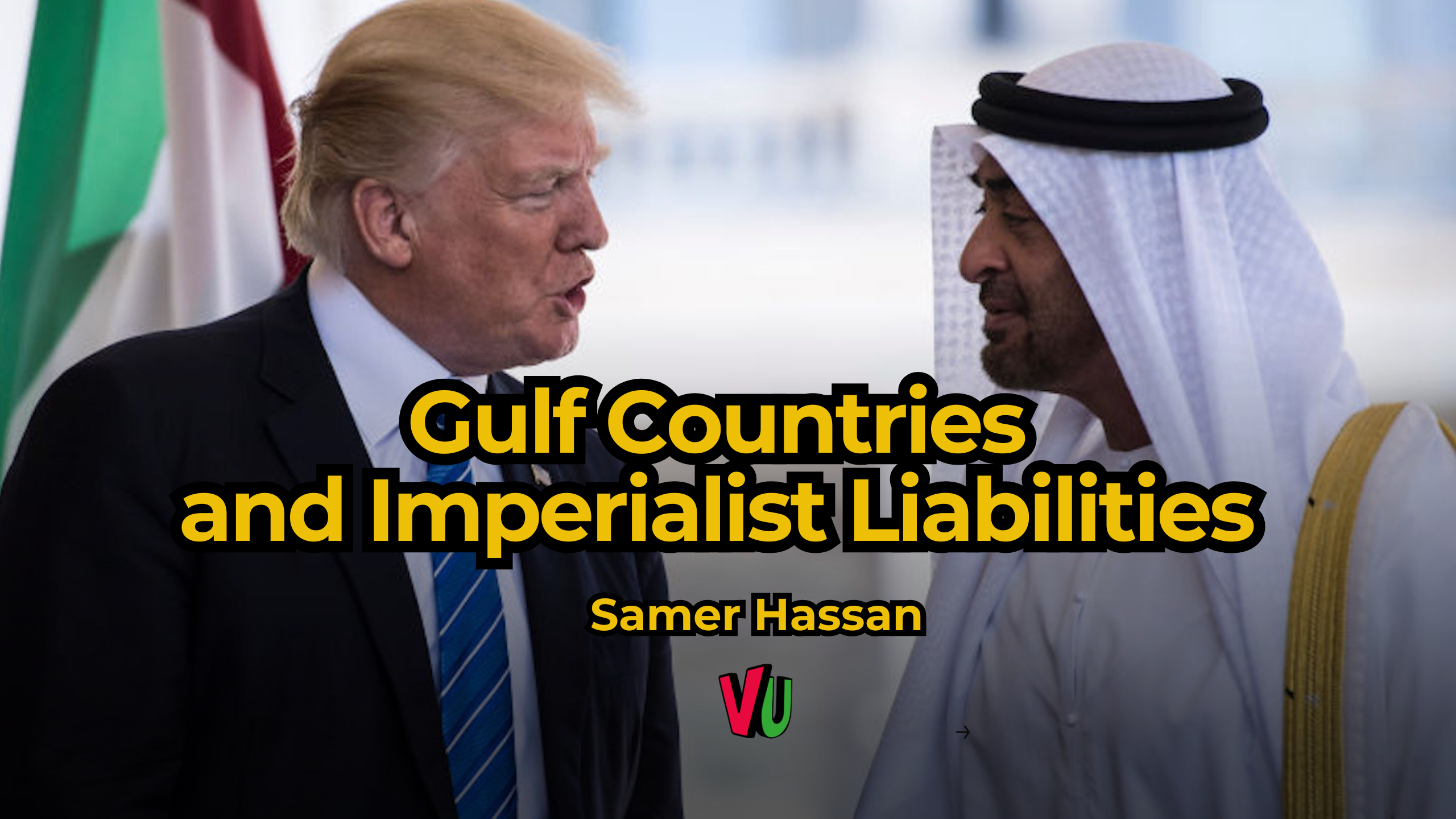
The US and its lust for global dominance are beginning to have real consequences on its allies (junior partners) and the world over. On March 28th, at a Saudi investment forum in Florida, Trump bragged about Saudi Arabia’s Prince Mohammed bin Salman, “kissing my ass.” Public belittling while demanding obedience shows how hollow American commitments to their ‘closest allies’ truly appear. Supposed deterrence in the form of US bases was in fact a liability, and reneging on agreements taught US opponents they couldn’t trust the US. What’s more, there is no sign of a ceasefire in sight after the US and Israel killed their negotiating counterparts in Iran, and Iran has assured the world that the war will end on their terms.
As the globe realises that living in a unipolar world is, in fact, a detriment to its future, Iran remains unyielding.
Iran has proven that it can effectively fight the United States and Israel, and that it intends to keep up the fight and substantially harm its opponents, both militarily and economically. Yet, no matter the outcome of America and Israel’s illegal war on Iran, West Asia and the world have changed. The writing is on the wall; betting on the US unipolar world is a bad investment.
Samer Hassan is a freelance writer and Palestinian advocate.
