
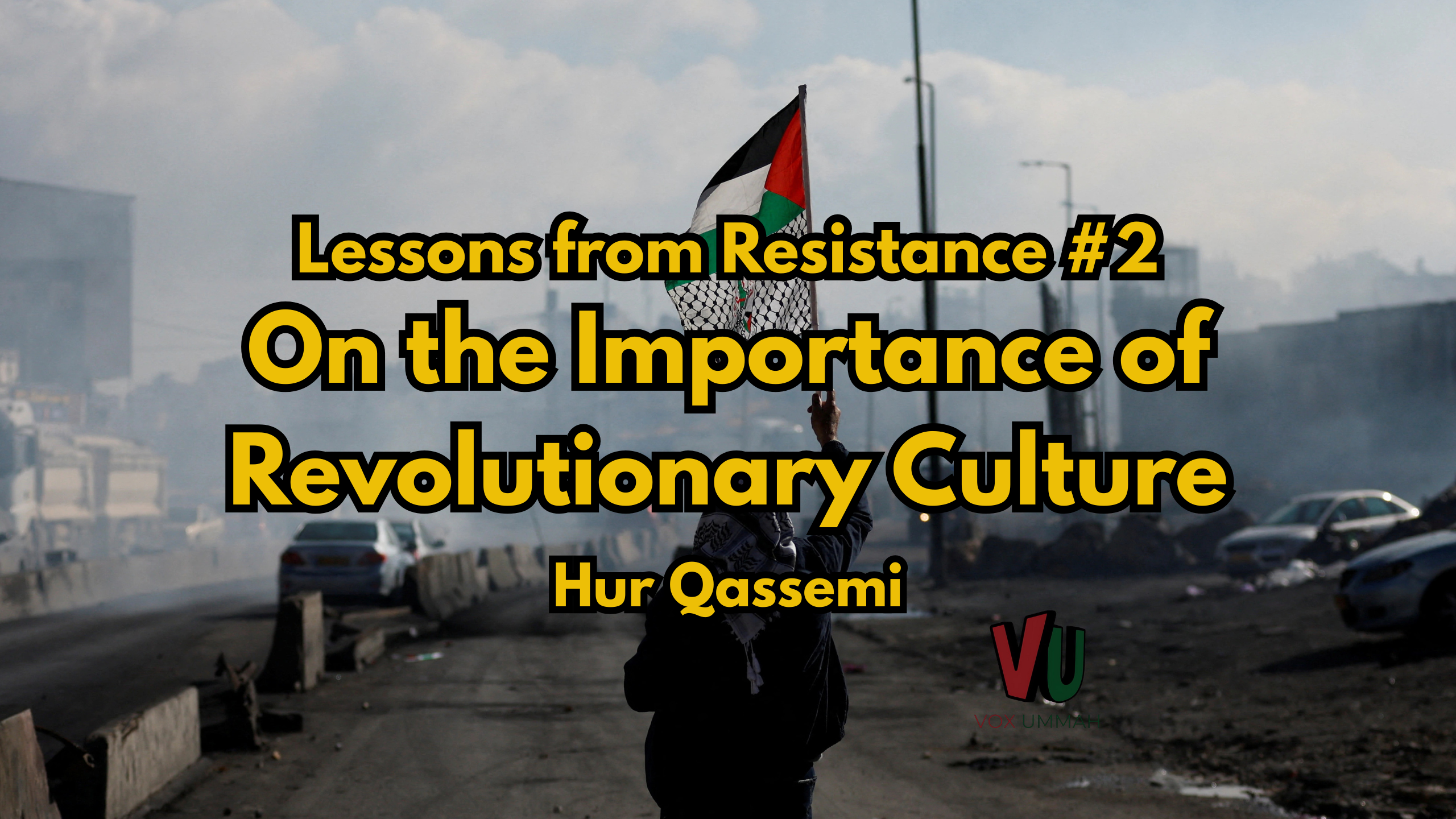
Hur Qassemi
This article is the second in the series, “Lessons from Resistance.” To view the first article in the series, click here.
Capitalism-imperialism seeks to destroy the cultures of the land it plunders, rendering it susceptible to further economic exploitation. Take, for example, the statement of Josep Borrell Fontelles, who has been serving as High Representative of the Union for Foreign Affairs and Security Policy. He said on record in 2022, “Most of the rest of the world is a jungle, and the jungle could invade the garden. […] The gardeners have to go to the jungle. Europeans must be more engaged with the rest of the world. Otherwise, the rest of the world will invade us, in different ways and means.” For Fontelles, the rest of the world is a growing jungle that, merely by existing, poses a threat to European stability both physically and culturally.
If left to flourish unincumbered, the rest of the world grows fiercely opposed to the oppressive structures imposed by global imperialism. That a small minority of Europeans and Americans benefit from the exploitation of the majority of people in the world requires a war perpetually waged in the realm of culture to maintain. The image and all illusions of the current world order shatter, however, in Gaza.
Within the illuminating landscape of Palestine, where existence in and of itself is a potent act of resistance, and Zionist scourges seek to impose their freakish necromancy against a defiantly surviving people, a cultural revolution like a spring of truth is pouring from Gaza into the periphery. Palestinians are the subject of endless narration by a world order bent on justifying their extermination. Yet, the stories and words of those who survive and resist defy their fate entirely. Any narrative supposing the humanity of the West and the backwardness of the native inhabitants of Palestine shrinks into oblivion against the realities in Gaza. This synthesis shatters the grand illusions of the West, demanding a revolution against a culture that permits genocide.
The colonized subject, according to Fanon, “discovers reality and transforms it into the pattern of his customs, into the practice of violence and into his plan for freedom.” As we strive to answer the call from Gaza, we can find a path towards resisting the genocidal cultures of the West by learning from the way Palestinians transform the waves of death and destruction sent to them from the imperial headquarters in the West into daily acts of survival.
We must remember martyr Khaled Nabhan, when he took his dead granddaughter, Reem, in his arms and said she was the “soul of my soul,” expressing love in the moment when everything was lost – stolen by Zionism. We must remind ourselves that the spokesperson of Saraya al Quds, martyr Abu Hamza, was married to the love of his life amid the constant devastations of genocide, a week before his assassination. We must listen to the poet Nima Hasan in Gaza, who writes,
“Throw your instincts wide open. / Summon the notary / before he swears the oath, / and leave all your inheritance / to a man who waged a war / he had nothing to do with, / a man who called out across the land: / “I love you,” / and then set all the gardens ablaze.”
While Zionism continues to feed the most evil and ungodly impulses ever witnessed by man, we must remain committed to nurturing a culture of love and a revolution against the world for Gaza. Hazrat Imam Ali, one of the greatest revolutionaries of the Islamic world said,
“So, do not bring down your self-respect, do not be mean and submissive and do not subjugate yourself through these vile and base traits though they may appear to make it possible for you to secure your hearts’ desires because nothing in this world can compensate for the loss of self-respect, nobility and honour.”
All of the glorified mores and standards constantly weaponized by the West are nothing but gruesome assemblages, while their gardens reek of death and domination. We must form our own from the path set by Gaza, and set the opulent gardens of the West ablaze.
In the next and final instalment of this series, “Lessons from Resistance,” Qassemi will explore the cultural values that the Axis of Resistance has revitalized and the necessity of delinking the Global South from the Western world.
Hur Qassemi, a student organiser for Palestine in Germany, advocates decolonised education and views resistance to Western hegemony as vital for oppressed nations’ liberation.
